From Independence to Intelligent Living: India's Smart Home Revolution
Every August, India pauses to celebrate the freedom it earned decades ago. It's a moment to reflect not just on history, but on how far the country has travelled since then — from a newly independent nation to a fast-growing technology hub. That same spirit of progress is now showing up in a very personal space: our homes.
Today, independence isn't only about a nation's story. It's also about the everyday choices we make — how much control we have over our surroundings, our time, and our comfort. This is where smart home automation solutions in India enter the picture, quietly reshaping what it means to live freely and comfortably within our own four walls.
From Independent India to a Digitally Connected India
India's growth story over the last few decades has been remarkable. Smartphones reached almost every household. Digital payments became a part of daily life, from paying for groceries to settling utility bills. Internet connectivity spread into small towns and villages, not just metro cities.
Alongside this, technologies like AI and IoT started moving from labs and factories into everyday consumer products. Devices began talking to each other. Data started working quietly in the background to make decisions simpler.
These shifts didn't happen in isolation. They built the foundation for something more personal — a home that responds to you, rather than one you have to constantly manage manually.
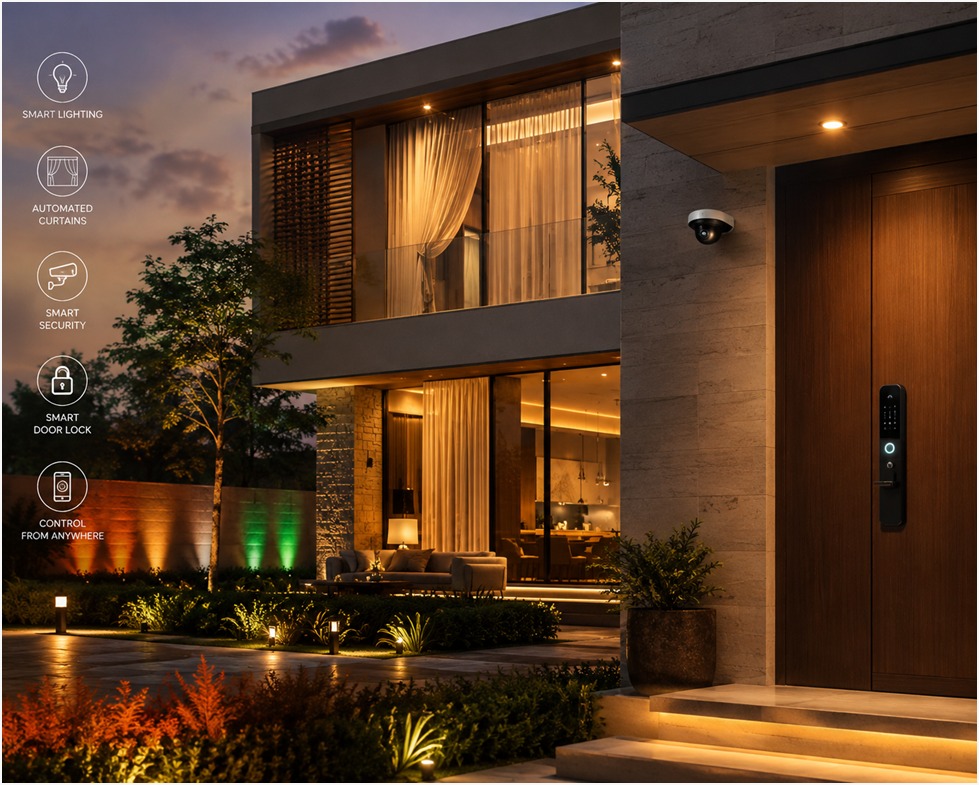
What Is a Smart Home?
A smart home is simply a home where different systems — lighting, security, climate, entertainment — can communicate with each other and be controlled without manual switches or constant supervision.
This is usually made possible through:
- Mobile apps that let you control devices from anywhere
- Voice commands for hands-free control
- Automated schedules that run tasks at set times
- A centralized system that ties everything together
In simple terms, instead of operating each appliance separately, a smart home lets you manage your entire living space through one connected system.
How Smart Home Automation Is Redefining Freedom
Think about what freedom means in daily life. It often comes down to having choices and control. Smart home automation extends that idea into the physical space you live in.
With automation, homeowners can:
- Turn lights on or off remotely, even when they're not home
- Set curtains to open and close automatically with the day's rhythm
- Manage air conditioning based on room occupancy or time of day
- Monitor their home's security in real time from a phone
- Lock and unlock doors without carrying a physical key
- Build routines that run automatically, without manual input
- Check in on their home while travelling for work or a holiday
None of this replaces personal choice — it simply removes the friction around it. That, in many ways, is a modern form of independence: freedom from repetitive tasks and constant manual oversight.
Brands like Esquire Automations are part of this shift in India, helping homeowners design automation systems that fit naturally into how they already live, rather than forcing them to adapt to new technology.
5 Ways Smart Homes Are Creating Intelligent Living in India
1. Smarter Home Security
Smart cameras, video doorbells, and door sensors give homeowners real-time visibility into who is at their door or moving through their property. Combined with smart door locks, this creates a layered approach to home security automation that goes beyond a traditional lock and key.
2. Greater Comfort and Convenience
Automated lighting, curtains, and climate control adjust to your preferences instead of requiring constant manual changes. Many systems also allow "scenes" — a single command that sets the right lighting, temperature, and ambience for a specific moment, like winding down in the evening.
3. Better Energy Management
Automation doesn't just add convenience — it can also support more mindful energy use. Scheduled lighting, occupancy-based climate control, and smart appliances can help reduce electricity that would otherwise be used unnecessarily, contributing to more energy-efficient homes over time.
4. Control From Anywhere
Whether you're at the office or out of town, smart systems let you check on your home, adjust settings, or respond to an alert instantly. This kind of remote access has become one of the more practical, everyday benefits of connected homes.
5. Personalized Living Experiences
Mornings, movie nights, family gatherings, and bedtime all have different needs. Smart home systems can be configured to shift lighting, sound, and climate to match each of these moments, creating a living space that adapts to how you actually live.
The Rising Popularity of Smart Homes in India
Several factors are quietly driving the shift toward smart home solutions across Indian cities:
- Rising awareness of what home automation systems can actually do
- Near-universal smartphone adoption, which makes app-based control accessible
- Growing concern around home security, especially in urban apartments
- Premium residential developments increasingly offering automation as a standard feature
- Interest in energy efficiency as electricity costs and environmental awareness rise
- A general shift toward convenience-first living, especially among working professionals
- Wider availability of smart lighting solutions and other smart home technology at more accessible price points
This isn't a niche trend anymore. It's steadily becoming part of how new homes are designed and how existing homes are upgraded, including smart home solutions in Coimbatore.
The Future of Smart Home Automation in India
The next phase of home automation in India is likely to move beyond simple remote control. As AI, IoT, and voice assistants mature, homes are expected to become more predictive — anticipating needs based on patterns rather than waiting for a command.
Imagine a home that adjusts lighting and temperature automatically based on your daily routine, or a security system that learns what "normal" activity looks like and flags anything unusual. This is the direction connected homes are heading: less about individual gadgets, and more about a cohesive, intelligent ecosystem working in the background.
Independence Day and the Idea of Intelligent Living
Independence, at its core, is about self-reliance and the freedom to shape your own life. Smart home automation, in its own quiet way, offers a similar experience within the home — greater control over your environment, less dependency on manual effort, and more time for the things that matter.
This isn't about grand gestures. It's about small, everyday freedoms: not worrying about whether you locked the door, not manually adjusting five different switches, not being disconnected from your home when you're away from it.
Conclusion
India's journey from independence to a digitally connected nation has been steady and transformative. That same spirit of progress is now shaping how we experience our homes. Smart home automation isn't about replacing tradition — it's about giving homeowners more control, security, and comfort in their daily lives.
As more Indian homes embrace intelligent living, the idea of freedom is quietly expanding from the nation's story to the story of each home. If you're considering how automation could fit into your own space, exploring professional smart home automation solutions is a good place to start.
